NGC 2070 and SN 1987A in Dorado
Image Info
Imaged
20131202
with 31.5cm f/5 Newtonian Reflector
and GSTAR-EX video camera
9 sector mosaic (3w x 3h) Planned with Asimoplan
200
video frames each sector with no filter (luminance channel)
Colour
info is lo-res, wide field print taken in 1989 on Hypered Kodak Ektar
1000 film.
See here for
blending colour channel method
Object Info
Emission nebula and cluster, also known as the Tarantula or 30 Doradus.
This massive nebula complex resides in the LMC at a distance of 165,000 LYs.
The small cluster at its centre (R136), contains some of the largest stars known.
The green/brown colour is from high OIII (Oxygen 3) emissions. The field includes the position of Supernova 1987A in the box at lower right.
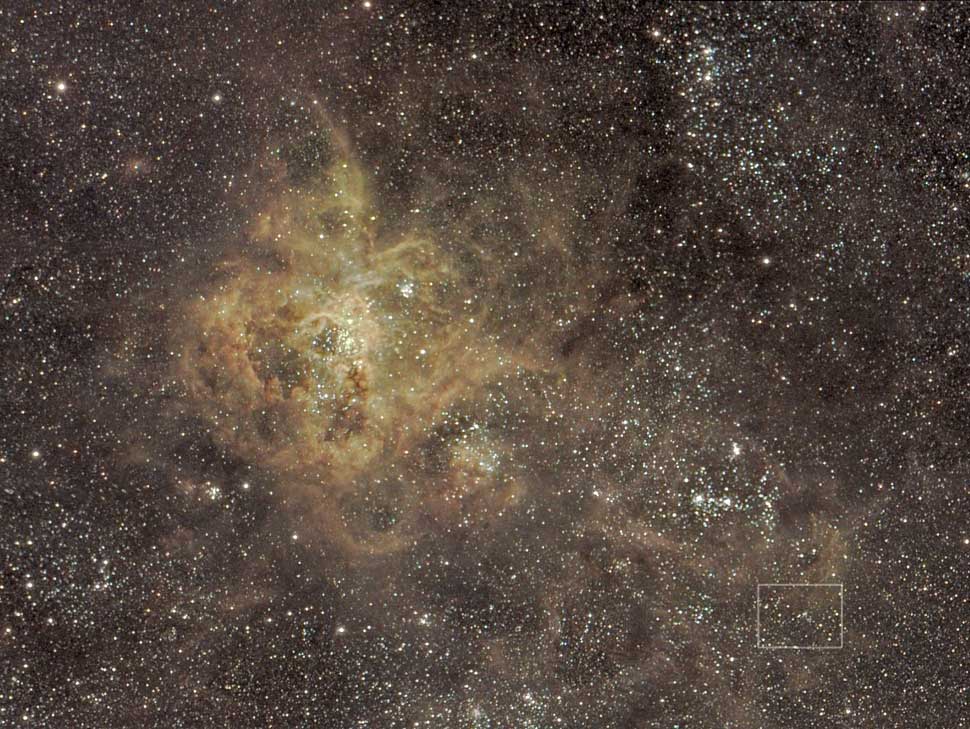
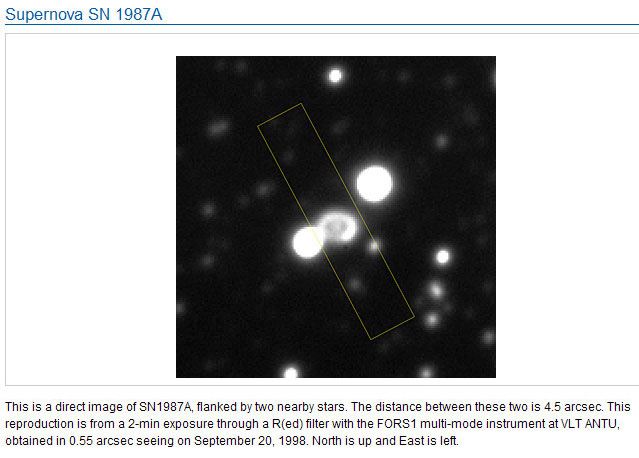
Observations on 26 January 2011 in good seeing and with the 31 cm at f/9 (Magnification 440X), reveal a small patch which is the oval light echo ring around the SN remnant. The ring around the SN remnant is 0.8" in diameter and about 16th magnitude in 2010. The SN remnant itself is still only about 0.1" across. The ring is about 1.5" from a 15th mag star with a 14th mag star 3" away on the other side (the pair in the smaller box). Box shows the area of ESO image below.
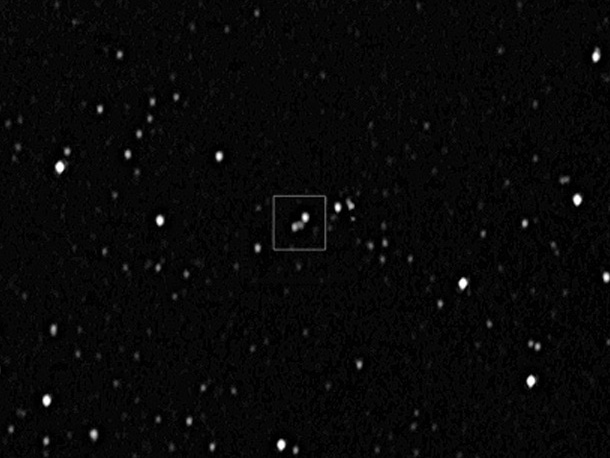
An extract from the ESO observations with the Antu 8.2 metre telescope.
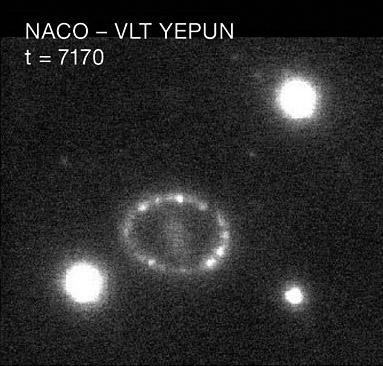
A later
image with the ESO telescope Yepun 8.2 metre system showing amazing
detail.
It shows the SNR at the centre changing shape and expanding compared to
the HST image below taken much earlier.
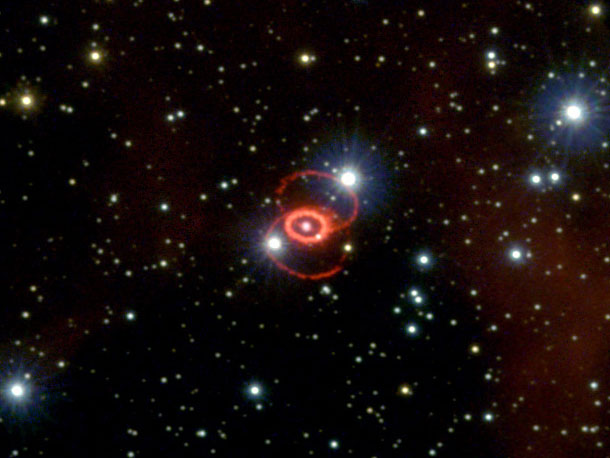
A Hubble Space Telescope image shows the actual SN remnant as the spot at the centre of a red oval and two other light echo rings.
Back in
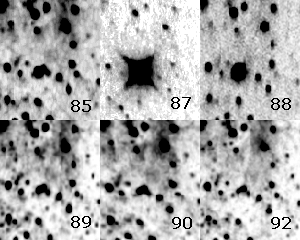
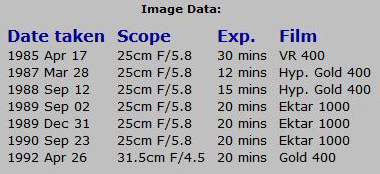
the day I did a series of images on film before and after the SN went
off.
This little animation shows the pre SN star, the SN and expansion of the brightest sections
of the light echoes in the years after the explosion.